
Seventeen years old, physically unwell and asked to share a message with people who were deeply suspicious of visions. Ellen Harmon certainly wasn’t putting her hand up for an easy job.
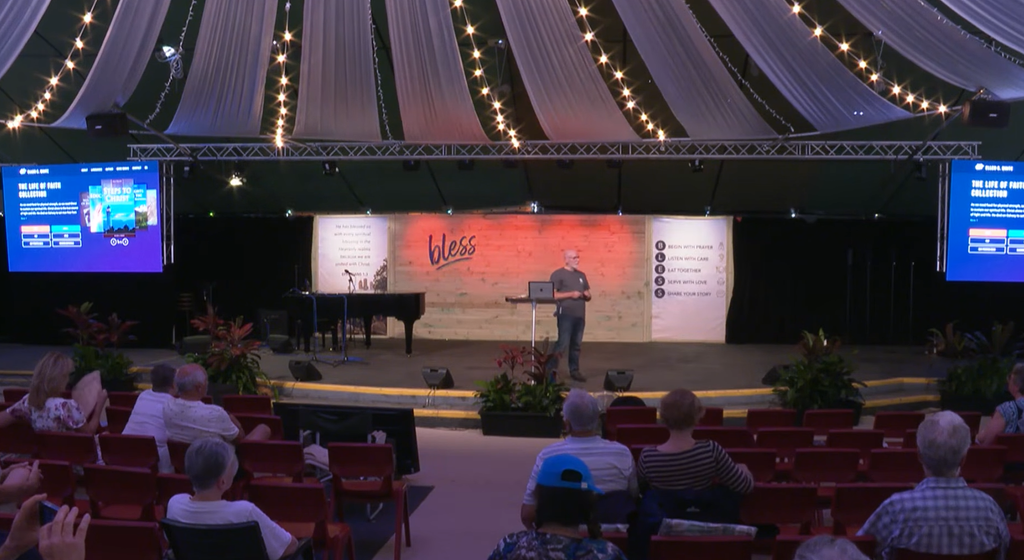
In Tuesday’s Big Camp presentation, Mark Pearce continued exploring Ellen White’s story, looking at her prophetic call and how early Adventists came to accept her gift. Along the way came some surprising history, a rather practical marriage proposal and a reminder that God works patiently with people who still have plenty to learn.
Mark began with the heartbreak of the Great Disappointment. For those expecting Jesus to return in October 1844, the passing of that day brought devastating grief. James White later recalled hearing that they needed to prepare for another winter: “I left the place of meeting and wept like a child.”
Ellen shared that confusion. Like many others, she initially concluded that because Jesus had not returned, prophecy had not been fulfilled as they expected.
Then, during morning worship with a small group of women in December 1844, she experienced her first vision. She described the Advent people travelling along a narrow path towards the heavenly city, with light behind them and Jesus ahead.
Mark drew attention to where that light stood: at the beginning of the path. The believers thought their journey was almost over, yet there was more travelling to do.
At the centre of the vision was a simple assurance: “If they kept their eyes fixed on Jesus, they were safe.”
For disappointed people trying to understand what had happened, this was a message of encouragement. Mark explained that it convinced Ellen that God had been leading them, even though their understanding needed correcting.
That thought has something to say to us too. We are still learning, and God’s patience with us is a blessing we can easily forget to extend to others.
“God meets people where they are and then moves them to where he wants them to be,” Mark said.
But receiving the vision and agreeing to share it were two different things. Ellen was young, inexperienced and afraid of how people would respond. Religious fanaticism had made the atmosphere especially difficult, and many Millerites wanted nothing to do with anyone claiming visions.
She even prayed that the responsibility might be given to somebody else.
This time, however, she spoke about her concerns with her father. His response was wonderfully straightforward: “If God calls you, he will open the way.”
Mark connected her reluctance with the experiences of Moses, Jeremiah and Jonah. Feeling inadequate was hardly a new experience among those God called.
The presentation also made room for the very human side of the pioneers. James White, who had objected to marriage while expecting Christ’s imminent return, eventually married Ellen himself. Their shared ministry had prompted gossip, and his proposal appears to have been decidedly practical. As Mark observed, “What a proposal.”
Yet affection clearly grew. James later described Ellen as “the crown of my rejoicing”, while Ellen remembered him as “the best man that ever trod shoe leather”. Quite a recommendation!
Behind the stories was an important question: how did believers decide whether Ellen’s gift was genuine?
Mark explained that they looked for a biblical foundation and examined the results of her ministry. Joseph Bates, for example, was initially sceptical. He asked questions, watched carefully and took time before becoming convinced.
Scripture remained the foundation. Quoting James White, Mark shared: “The Bible is a perfect and complete revelation. It is our only rule of faith and practice.”
The practical results mattered too. Spiritual gifts were given to build up the church, encourage maturity and bring people together.
Perhaps one of the most useful reminders came near the end. Ellen herself objected when people used her visions as a measuring stick to judge others or exclude those who were not yet convinced.
Mark encouraged patience with people who are still learning about her life and ministry.
“After all, you didn’t get to where you are in one leap.”
That is worth remembering in any conversation about faith. Understanding takes time, and people need room to ask honest questions. His practical suggestion was simple: read what she wrote and become acquainted with her work.
Mark closed by returning to the purpose of that work: “Her writings are meant to lead us to Scripture and exalt Jesus Christ.”
Through disappointment, uncertainty and an unexpected calling, that remained the focus of Tuesday’s presentation. Keep looking to Jesus, keep learning from His Word, and give others the patience and encouragement we have needed ourselves.