
also they have a new range of Patritti


also they have a new range of Patritti
Go to https://sqbigcamp26.bluevineyardevents.com/registration/ and choose day visitors, then select Sabbath Meal Tickets to buy meal tickets for Sabbath.

A little Australian sunshine in every glass. From Australian vineyards to your camp table, Patritti brings the delicious flavour of ripe grapes to every pour. Naturally sweet and full of fruity flavour, these non-alcoholic juices are made for sharing.
Patritti’s sparkling grape juices are made from 100% Australian grape juice, with no added sugar, colours, flavours or preservatives. Just lovely grape flavour and a refreshing sparkle. Serve chilled and make even a simple picnic feel like a special occasion!

Pick up a delicious deal at the Big Camp Bulk Foods Tent, beside the Camp Shop:
Pure juice — 1 L bottles, $42 per carton.
Sparkling juice — all varieties, $80 per box.
That’s less than wholesale cost!
Take a carton home and keep a little of that camp celebration bubbling.

We often picture Ellen White in her later years, full of faith and confidence in God. But the young Ellen had some very different days. She struggled with fear, felt overwhelmed by her shortcomings and wondered whether God could really accept her. Sound familiar?
In Monday’s Big Camp presentation, Mark Pearce explored Ellen White’s journey of faith, introducing campers to the young person behind the familiar name. Her confidence in God had a story behind it, and some of that story was painful.
“Ellen struggled with her faith as anyone becoming a Christian does,” Mark reminded us.
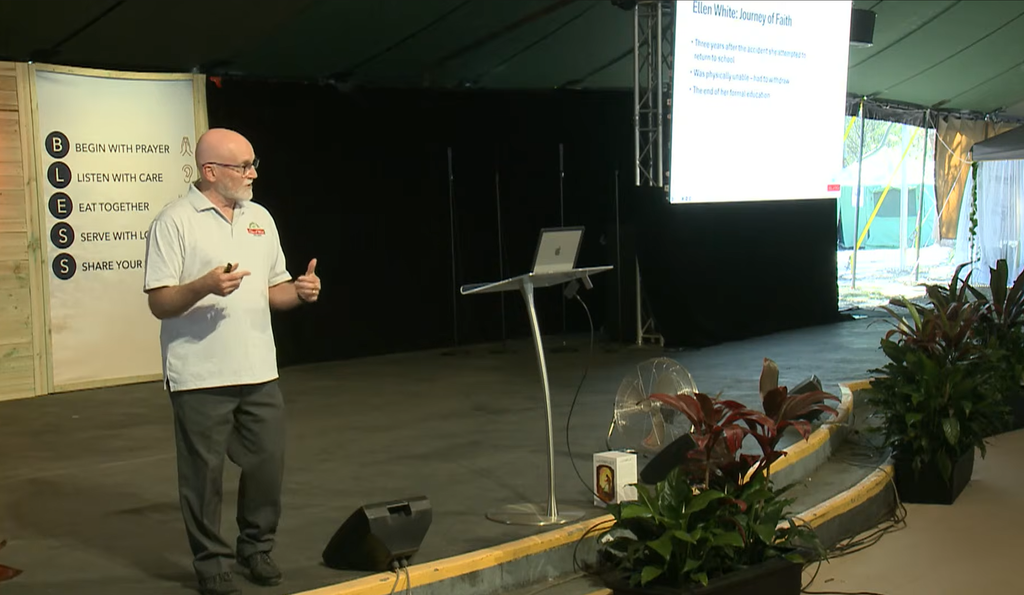
A serious injury at just nine years of age changed Ellen’s appearance, affected her health and eventually brought her formal schooling to an end. For a child who loved reading and learning, that was a devastating loss. She wrestled with why God had allowed it to happen, then felt guilty for questioning Him.
Adding to her distress were religious books describing children who seemed to live faultless lives. They always made the right choices, apparently without the doubts and struggles she knew so well. Instead of encouraging her, those stories left her feeling that she could never measure up.
There’s something familiar about that, even without a nineteenth-century book in our hands. It can be easy to look around a church and imagine everyone else has their faith neatly sorted while we’re still trying to work ours out.
For Ellen, the struggle was made worse by her belief in an eternally burning hell and her fear that God was angry with her. Even after baptism, misunderstandings about holiness left her anxious about her standing with Him. And for a long time, she kept it all to herself.
One of the most moving parts of Mark’s presentation was the account of a dream in which Ellen encountered Jesus. She had longed to meet Him, believing He would understand her suffering. In the dream, His kindness reached the very place where she was most afraid.
“She knew at once that Jesus not only understood but loved her anyway,” Mark explained.
Here was a Saviour who knew every circumstance of her life, including her thoughts, fears and failures. He approached her with a smile and the reassurance, “Fear not.”
Ellen later described the change this brought: “My views of the Father were changed. I now looked upon Him as a kind and tender parent rather than a stern tyrant compelling men toward obedience.”
That is quite a change in how you see God. It changes how you pray, how you understand His guidance and whether you feel able to come to Him when you’ve failed.
Ellen eventually opened up to her mother, who arranged for her to speak with Methodist minister Levi Stockman. He listened to her story and helped her understand God’s love. His encouragement was to return home trusting in Jesus.
There was a practical lesson here for all of us. We don’t have to carry every spiritual struggle alone. A patient listener, a trusted friend or a conversation with someone who can point us to Jesus may make more difference than we realise.
As Ellen found assurance in her Saviour, she wanted her friends to know Him too. Sharing her faith grew out of discovering that she was loved. Jesus became central to her experience, and, as Mark emphasised, “Her faith is built upon Scripture.”
Monday’s presentation also brought a timely reminder for a busy camp week. Quoting from The Desire of Ages, Mark shared Ellen’s words: “We must individually hear Him speaking to the heart.”
“Prayer is also a time to be quiet and listen for him,” he added.
Between meetings, meals, children’s activities and catching up with friends, a little quiet can be hard to find. Yet that personal time with God shapes what we bring into every other part of the day.
Ellen’s journey gives encouragement to anyone who still has questions. Her understanding grew. Her faith deepened. The confidence we associate with her later life developed through real struggles and a growing knowledge of Jesus.
We can bring our questions to Him too, open His Word, and make room to listen. The Saviour who met Ellen with love knows our story just as well.
Seventeen years old, physically unwell and asked to share a message with people who were deeply suspicious of visions. Ellen Harmon certainly wasn’t putting her hand up for an easy job.
In Tuesday’s Big Camp presentation, Mark Pearce continued exploring Ellen White’s story, looking at her prophetic call and how early Adventists came to accept her gift. Along the way came some surprising history, a rather practical marriage proposal and a reminder that God works patiently with people who still have plenty to learn.
Mark began with the heartbreak of the Great Disappointment. For those expecting Jesus to return in October 1844, the passing of that day brought devastating grief. James White later recalled hearing that they needed to prepare for another winter: “I left the place of meeting and wept like a child.”
Ellen shared that confusion. Like many others, she initially concluded that because Jesus had not returned, prophecy had not been fulfilled as they expected.
Then, during morning worship with a small group of women in December 1844, she experienced her first vision. She described the Advent people travelling along a narrow path towards the heavenly city, with light behind them and Jesus ahead.
Mark drew attention to where that light stood: at the beginning of the path. The believers thought their journey was almost over, yet there was more travelling to do.
At the centre of the vision was a simple assurance: “If they kept their eyes fixed on Jesus, they were safe.”
For disappointed people trying to understand what had happened, this was a message of encouragement. Mark explained that it convinced Ellen that God had been leading them, even though their understanding needed correcting.
That thought has something to say to us too. We are still learning, and God’s patience with us is a blessing we can easily forget to extend to others.
“God meets people where they are and then moves them to where he wants them to be,” Mark said.
But receiving the vision and agreeing to share it were two different things. Ellen was young, inexperienced and afraid of how people would respond. Religious fanaticism had made the atmosphere especially difficult, and many Millerites wanted nothing to do with anyone claiming visions.
She even prayed that the responsibility might be given to somebody else.
This time, however, she spoke about her concerns with her father. His response was wonderfully straightforward: “If God calls you, he will open the way.”
Mark connected her reluctance with the experiences of Moses, Jeremiah and Jonah. Feeling inadequate was hardly a new experience among those God called.
The presentation also made room for the very human side of the pioneers. James White, who had objected to marriage while expecting Christ’s imminent return, eventually married Ellen himself. Their shared ministry had prompted gossip, and his proposal appears to have been decidedly practical. As Mark observed, “What a proposal.”
Yet affection clearly grew. James later described Ellen as “the crown of my rejoicing”, while Ellen remembered him as “the best man that ever trod shoe leather”. Quite a recommendation!
Behind the stories was an important question: how did believers decide whether Ellen’s gift was genuine?
Mark explained that they looked for a biblical foundation and examined the results of her ministry. Joseph Bates, for example, was initially sceptical. He asked questions, watched carefully and took time before becoming convinced.
Scripture remained the foundation. Quoting James White, Mark shared: “The Bible is a perfect and complete revelation. It is our only rule of faith and practice.”
The practical results mattered too. Spiritual gifts were given to build up the church, encourage maturity and bring people together.
Perhaps one of the most useful reminders came near the end. Ellen herself objected when people used her visions as a measuring stick to judge others or exclude those who were not yet convinced.
Mark encouraged patience with people who are still learning about her life and ministry.
“After all, you didn’t get to where you are in one leap.”
That is worth remembering in any conversation about faith. Understanding takes time, and people need room to ask honest questions. His practical suggestion was simple: read what she wrote and become acquainted with her work.
Mark closed by returning to the purpose of that work: “Her writings are meant to lead us to Scripture and exalt Jesus Christ.”
Through disappointment, uncertainty and an unexpected calling, that remained the focus of Tuesday’s presentation. Keep looking to Jesus, keep learning from His Word, and give others the patience and encouragement we have needed ourselves.
Abraham misled people. Moses lost his temper. Elijah became afraid and ran. Jeremiah reached the point where he wished he had never been born. These are hardly the spotless biographies we might expect of God’s messengers, yet the Bible tells their stories with remarkable honesty.
In Wednesday’s Big Camp presentation, “When Prophets Are Human”, Mark Pearce invited campers to open their Bibles and take a closer look at the people God called.
His starting point was a question about our expectations. Do we assume that someone called to be a prophet suddenly understands everything, always makes the right decision and has nothing more to learn?
“The biblical data should shape our understanding of prophets, their inspiration, and how they did their work,” Mark said.
It sounds straightforward, until we start reading some of those stories closely.
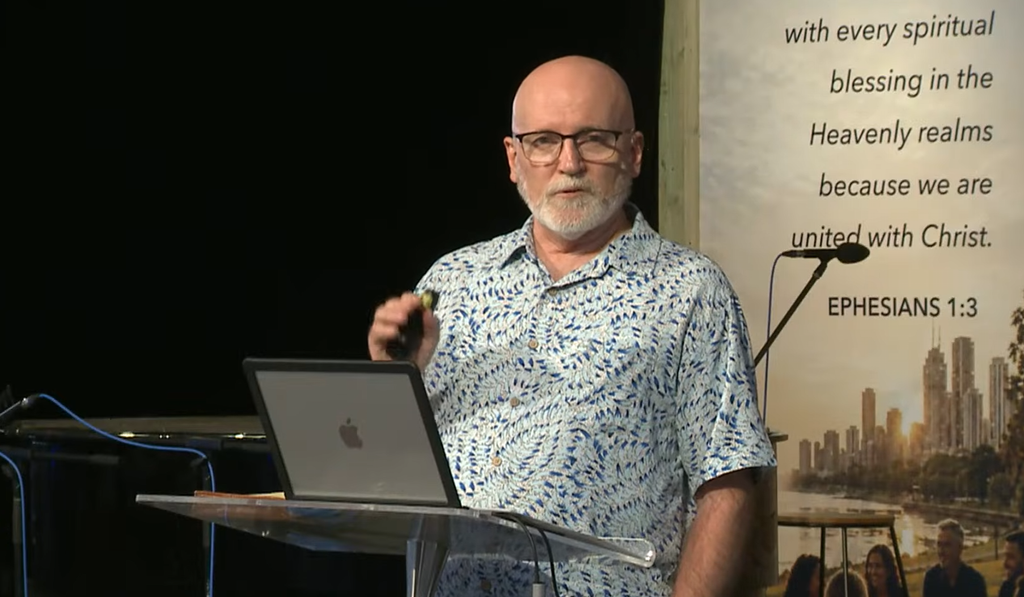
Take Abraham. In Genesis 20, God identifies him as a prophet in the middle of an episode where he has concealed the truth about his relationship with Sarah. Fear had led him to mislead others, and it wasn’t even the first time.
“Abraham is described as a prophet in the context of him telling untruths,” Mark observed.
The Bible allows that uncomfortable detail to remain. God had called Abraham, but Abraham was still learning to trust Him.
Then there was Moses, carrying the weight of a complaining nation. At one point he cried out to God that the burden was simply too much. Later, in frustration, he struck the rock when God had told him to speak to it. His disobedience had consequences, even though he had spent years faithfully leading God’s people.
Elijah’s story brought another side of human weakness into view. The courageous prophet who stood for God on Mount Carmel later fled from Jezebel, exhausted and afraid. He felt desperately alone.
God continued to deal with him, providing for him and giving him work to do. The man who had shown such courage also knew what it was to feel overwhelmed.
For anyone who has had a strong Sabbath followed by a very shaky Monday, there is something reassuringly recognisable about that.
Mark acknowledged that looking closely at these accounts could feel uncomfortable. With a little humour, he recalled the saying that a preacher’s job is to “comfort the afflicted and afflict the comfortable”.
There was plenty to think about on both sides!
Jeremiah’s anguish was equally confronting. His calling involved rejection, danger and deep personal distress. Scripture records his strong emotions alongside his faithful delivery of God’s message. Being called did not spare him the pain of being human.
As Mark moved through the biblical examples, a consistent point emerged.
“Prophets were human beings like us.”
“They had their faults, their failures, their strong points, their good characteristics, and their love and loyalty to God.”
Recognising that humanity means taking seriously the whole account Scripture gives us, including the failures and their consequences. It also helps us appreciate the patience and mercy of the God who continued working with them.
“God works with each of them within their limitations and sometimes despite their limitations,” Mark said.
That led naturally to Ellen White. Having spent Monday exploring her early faith and Tuesday considering her prophetic call, Mark now asked what expectations we bring to her life and writings.
If the Bible shows that God’s messengers remained human, why would we expect Ellen to be beyond every weakness or limitation?
Quoting her own statement about infallibility, Mark shared: “I never claimed it. God alone is infallible.”
He explained that we have extensive records of Ellen’s writings, relationships and daily life. Naturally, those records reveal her humanity. They also reveal a person who loved God and wanted others to know Jesus.
Mark addressed questions about her use of other authors and the development of her early beliefs. He argued that these need to be understood in their historical setting and in light of what Scripture shows about God’s messengers. Discovering that a prophet learned, grew or used existing sources may challenge our assumptions about inspiration.
“God does not suddenly and miraculously take an inspired writer to full maturity in their understanding,” he said.
That was an important thread throughout the presentation. A call from God does not mean a person has reached the end of their learning. God continues to teach and lead.
Mark’s closing appeal held together openness and careful discernment. Drawing on Paul’s counsel, he reminded campers not to despise prophecies, but to “test everything and hold fast to what is good”.
Then came a simple invitation concerning God’s messengers: “Let them be human.”
His final prayer brought the lesson close to home: “Lord, help us to be gentle with each other. Help us to be compassionate.”
We can be grateful that Scripture tells the truth about the people God used. Their stories give us reason to trust His patience with us, and reason to show a little more patience with one another.
How does a message from God become words on a page? Does the writer simply take dictation? Can inspired writing be edited? And what happens when the people carrying God’s message have different backgrounds, vocabularies and ways of expressing themselves?
In Thursday’s Big Camp presentation, Mark Pearce explored inspiration, taking campers into Scripture and Ellen White’s own explanations of how she understood her work.
Following Wednesday’s look at the humanity of prophets, this fourth presentation considered how God communicates through those very human messengers.
Mark began by acknowledging the wide range of attitudes towards Ellen White. Some treat her writings as the final word on every biblical question. Others use selected statements to support an argument, while some rarely read her at all.
He suggested that difficulties often begin with assumptions about how inspiration must work. When people discover something that doesn’t fit those assumptions, their confidence can suffer.
His approach was to start with Scripture: “We need to adjust our concept of inspiration to fit the information, to fit the data that we find in the Bible.”
Before exploring the process, Mark established an important foundation. Ellen White’s writings were intended to lead readers to the Bible.
“The Bible is the standard. Test everything by the Bible.”
Quoting Ellen, he shared: “He has not given any additional light to take the place of His Word.”

That gives us a useful question to carry into our reading: is this drawing us into a deeper understanding of Scripture and a closer relationship with Jesus?
Mark then explained three terms that can sound rather technical until we see how personally they involve us: revelation, inspiration and illumination.
Revelation concerns the message God gives. Inspiration concerns the ways He works through human messengers to communicate and preserve that message. Illumination concerns our understanding as we read.
“And that’s where, as we read Scripture, we pray that the Holy Spirit will open our minds so we get the message that He intended.”
The Holy Spirit’s work, then, reaches right into our own time with the Bible. We can ask for His guidance as we open its pages.
Turning to the biblical writers, Mark emphasised that God worked through people whose minds and abilities remained involved in the task.
“They were not robots.”
Some received dreams or visions. Others wrote as witnesses to events or carefully investigated the accounts available to them. Mark pointed to Luke as an example of an inspired researcher. God used different ways of bringing His message to His people.
One of the most memorable statements came from Ellen White’s description of the biblical authors: “The writers of the Bible were God’s penmen, not His pen.”
Their personalities and ways of expressing themselves remained evident. Mark explained that, in Ellen’s understanding, the Holy Spirit guided the mind as the writer communicated what God had given.
That led to a practical historical question: could Ellen’s published writings be revised?
Mark described the circumstances surrounding an 1883 General Conference resolution concerning the republication of her early testimonies. Some had been written under difficult or hurried conditions, and the intention was to improve their expression while preserving their meaning.
The resolution allowed changes in wording “without in any measure changing the thought”.
For Mark, this illustrated the understanding that the message could be expressed more clearly without losing its inspired purpose. Improving a sentence did not mean abandoning what God had communicated.
Ellen also described her dependence on God throughout the process. Receiving a vision was only part of the responsibility. She still needed help to explain what she had seen.
“I am just as dependent upon the Spirit of the Lord in relating or writing a vision as in having the vision,” she wrote.
Mark illustrated this with the account of a vision Ellen received at Salamanca in November 1890. According to the account he shared, she repeatedly found herself unable to relate it until several months later, when she delivered the message at a General Conference morning meeting. A participant then confirmed that it described discussions held the previous evening.
The morning meeting, incidentally, began at 5 am. Something to remember when our own camp alarm feels a little unreasonable!
Mark also returned to Ellen’s use of historical sources. In the introduction to The Great Controversy, she explained that she sometimes used other writers’ descriptions because they clearly expressed the events she was presenting.
He quoted her son Willie’s explanation: “Mother has never claimed to be an authority on history.”
Her purpose was to communicate the spiritual significance of the conflict between good and evil. Mark cautioned against using her writings to settle historical dates and disputes they were not intended to resolve.
Throughout the presentation, he encouraged campers to consider a writer’s education, circumstances, culture and growing understanding. These were part of the human setting through which the message came.
“The question is, is God’s message preserved?”
Mark’s answer was a confident yes. He pointed to the continuing clarity of God’s love and saving purpose, communicated through the varied voices of Scripture.
Thursday’s presentation gave campers plenty to think about, but it also offered a practical invitation. Open the Bible, ask for the Holy Spirit’s guidance, and listen carefully for what God wants to communicate.
The God who worked through human messengers still wants His message to reach human hearts, including ours.
Stanthorpe Pathfinder Club says a big ‘thank-you’ for supporting their fundraiser at the Sunday Fun Day!
Club Director Howard Wilmot says the funds raised will help Pathfinders to the AUC Camporee in January.
“Our sales of apple juice and honey totalled a little over $4000.”
Howard and his wife Debbie, part of apple juicing royalty on the Granite Belt, had the juice especially pressed for Camp – bins of Pink Ladies and Granny Smiths one week – perfectly blended juice the next! All proudly wearing the historic GLADHILL label.
The last fresh chilled glass-bottled Stanthorpe apple juice which was available from the Camp Store has now sold out. See you next year!!

A battery and charger have gone missing at camp. If you’ve borrowed them, picked them up by mistake or know where they are, please return them to the Superintendent’s Office so they can be reunited with their owner. Thank you!

Discover fresh ideas and opportunities to serve—Adventist Volunteers, Adventist Education, Adventist Careers and a wide range of ministries are all here to inspire you. Come see what’s new and exciting in the Adventist space. Most exhibitors are not able to stay for Sabbath, so today will be the last opportunity to explore the Expo Hall.
Open Friday 2:30–5:00 pm
Closed Sabbath
Don’t miss your final chance today!