
Abraham misled people. Moses lost his temper. Elijah became afraid and ran. Jeremiah reached the point where he wished he had never been born. These are hardly the spotless biographies we might expect of God’s messengers, yet the Bible tells their stories with remarkable honesty.
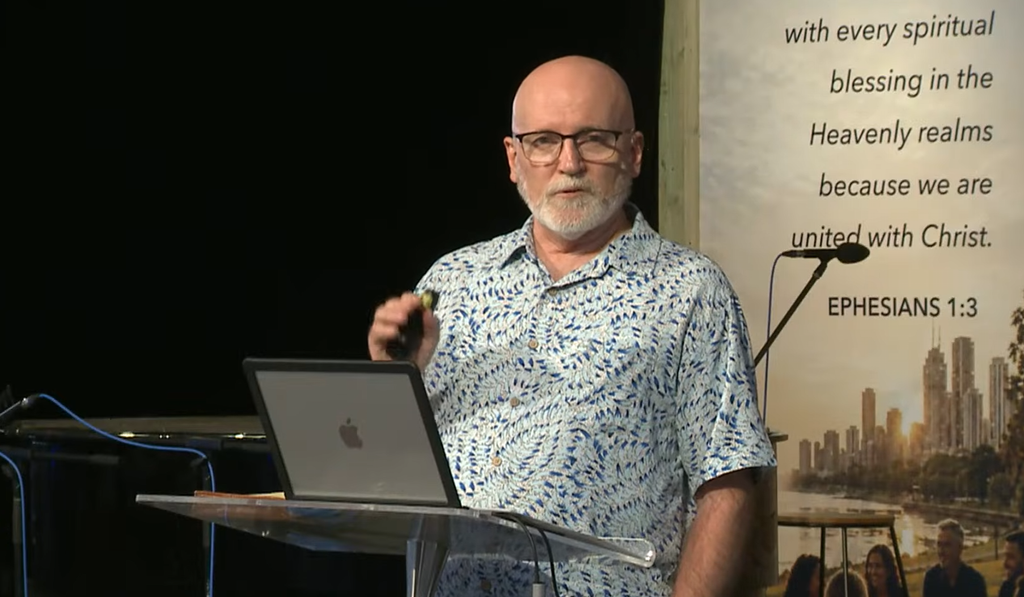
In Wednesday’s Big Camp presentation, “When Prophets Are Human”, Mark Pearce invited campers to open their Bibles and take a closer look at the people God called.
His starting point was a question about our expectations. Do we assume that someone called to be a prophet suddenly understands everything, always makes the right decision and has nothing more to learn?
“The biblical data should shape our understanding of prophets, their inspiration, and how they did their work,” Mark said.
It sounds straightforward, until we start reading some of those stories closely.
Take Abraham. In Genesis 20, God identifies him as a prophet in the middle of an episode where he has concealed the truth about his relationship with Sarah. Fear had led him to mislead others, and it wasn’t even the first time.
“Abraham is described as a prophet in the context of him telling untruths,” Mark observed.
The Bible allows that uncomfortable detail to remain. God had called Abraham, but Abraham was still learning to trust Him.
Then there was Moses, carrying the weight of a complaining nation. At one point he cried out to God that the burden was simply too much. Later, in frustration, he struck the rock when God had told him to speak to it. His disobedience had consequences, even though he had spent years faithfully leading God’s people.
Elijah’s story brought another side of human weakness into view. The courageous prophet who stood for God on Mount Carmel later fled from Jezebel, exhausted and afraid. He felt desperately alone.
God continued to deal with him, providing for him and giving him work to do. The man who had shown such courage also knew what it was to feel overwhelmed.
For anyone who has had a strong Sabbath followed by a very shaky Monday, there is something reassuringly recognisable about that.
Mark acknowledged that looking closely at these accounts could feel uncomfortable. With a little humour, he recalled the saying that a preacher’s job is to “comfort the afflicted and afflict the comfortable”.
There was plenty to think about on both sides!
Jeremiah’s anguish was equally confronting. His calling involved rejection, danger and deep personal distress. Scripture records his strong emotions alongside his faithful delivery of God’s message. Being called did not spare him the pain of being human.
As Mark moved through the biblical examples, a consistent point emerged.
“Prophets were human beings like us.”
“They had their faults, their failures, their strong points, their good characteristics, and their love and loyalty to God.”
Recognising that humanity means taking seriously the whole account Scripture gives us, including the failures and their consequences. It also helps us appreciate the patience and mercy of the God who continued working with them.
“God works with each of them within their limitations and sometimes despite their limitations,” Mark said.
That led naturally to Ellen White. Having spent Monday exploring her early faith and Tuesday considering her prophetic call, Mark now asked what expectations we bring to her life and writings.
If the Bible shows that God’s messengers remained human, why would we expect Ellen to be beyond every weakness or limitation?
Quoting her own statement about infallibility, Mark shared: “I never claimed it. God alone is infallible.”
He explained that we have extensive records of Ellen’s writings, relationships and daily life. Naturally, those records reveal her humanity. They also reveal a person who loved God and wanted others to know Jesus.
Mark addressed questions about her use of other authors and the development of her early beliefs. He argued that these need to be understood in their historical setting and in light of what Scripture shows about God’s messengers. Discovering that a prophet learned, grew or used existing sources may challenge our assumptions about inspiration.
“God does not suddenly and miraculously take an inspired writer to full maturity in their understanding,” he said.
That was an important thread throughout the presentation. A call from God does not mean a person has reached the end of their learning. God continues to teach and lead.
Mark’s closing appeal held together openness and careful discernment. Drawing on Paul’s counsel, he reminded campers not to despise prophecies, but to “test everything and hold fast to what is good”.
Then came a simple invitation concerning God’s messengers: “Let them be human.”
His final prayer brought the lesson close to home: “Lord, help us to be gentle with each other. Help us to be compassionate.”
We can be grateful that Scripture tells the truth about the people God used. Their stories give us reason to trust His patience with us, and reason to show a little more patience with one another.