
How does a message from God become words on a page? Does the writer simply take dictation? Can inspired writing be edited? And what happens when the people carrying God’s message have different backgrounds, vocabularies and ways of expressing themselves?
In Thursday’s Big Camp presentation, Mark Pearce explored inspiration, taking campers into Scripture and Ellen White’s own explanations of how she understood her work.
Following Wednesday’s look at the humanity of prophets, this fourth presentation considered how God communicates through those very human messengers.
Mark began by acknowledging the wide range of attitudes towards Ellen White. Some treat her writings as the final word on every biblical question. Others use selected statements to support an argument, while some rarely read her at all.
He suggested that difficulties often begin with assumptions about how inspiration must work. When people discover something that doesn’t fit those assumptions, their confidence can suffer.
His approach was to start with Scripture: “We need to adjust our concept of inspiration to fit the information, to fit the data that we find in the Bible.”
Before exploring the process, Mark established an important foundation. Ellen White’s writings were intended to lead readers to the Bible.
“The Bible is the standard. Test everything by the Bible.”
Quoting Ellen, he shared: “He has not given any additional light to take the place of His Word.”
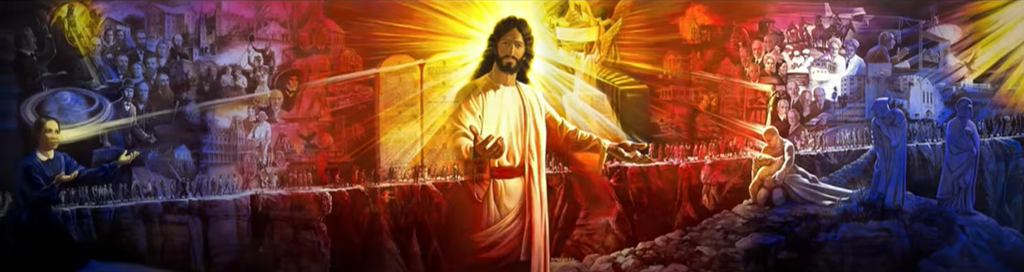
That gives us a useful question to carry into our reading: is this drawing us into a deeper understanding of Scripture and a closer relationship with Jesus?
Mark then explained three terms that can sound rather technical until we see how personally they involve us: revelation, inspiration and illumination.
Revelation concerns the message God gives. Inspiration concerns the ways He works through human messengers to communicate and preserve that message. Illumination concerns our understanding as we read.
“And that’s where, as we read Scripture, we pray that the Holy Spirit will open our minds so we get the message that He intended.”
The Holy Spirit’s work, then, reaches right into our own time with the Bible. We can ask for His guidance as we open its pages.
Turning to the biblical writers, Mark emphasised that God worked through people whose minds and abilities remained involved in the task.
“They were not robots.”
Some received dreams or visions. Others wrote as witnesses to events or carefully investigated the accounts available to them. Mark pointed to Luke as an example of an inspired researcher. God used different ways of bringing His message to His people.
One of the most memorable statements came from Ellen White’s description of the biblical authors: “The writers of the Bible were God’s penmen, not His pen.”
Their personalities and ways of expressing themselves remained evident. Mark explained that, in Ellen’s understanding, the Holy Spirit guided the mind as the writer communicated what God had given.
That led to a practical historical question: could Ellen’s published writings be revised?
Mark described the circumstances surrounding an 1883 General Conference resolution concerning the republication of her early testimonies. Some had been written under difficult or hurried conditions, and the intention was to improve their expression while preserving their meaning.
The resolution allowed changes in wording “without in any measure changing the thought”.
For Mark, this illustrated the understanding that the message could be expressed more clearly without losing its inspired purpose. Improving a sentence did not mean abandoning what God had communicated.
Ellen also described her dependence on God throughout the process. Receiving a vision was only part of the responsibility. She still needed help to explain what she had seen.
“I am just as dependent upon the Spirit of the Lord in relating or writing a vision as in having the vision,” she wrote.
Mark illustrated this with the account of a vision Ellen received at Salamanca in November 1890. According to the account he shared, she repeatedly found herself unable to relate it until several months later, when she delivered the message at a General Conference morning meeting. A participant then confirmed that it described discussions held the previous evening.
The morning meeting, incidentally, began at 5 am. Something to remember when our own camp alarm feels a little unreasonable!
Mark also returned to Ellen’s use of historical sources. In the introduction to The Great Controversy, she explained that she sometimes used other writers’ descriptions because they clearly expressed the events she was presenting.
He quoted her son Willie’s explanation: “Mother has never claimed to be an authority on history.”
Her purpose was to communicate the spiritual significance of the conflict between good and evil. Mark cautioned against using her writings to settle historical dates and disputes they were not intended to resolve.
Throughout the presentation, he encouraged campers to consider a writer’s education, circumstances, culture and growing understanding. These were part of the human setting through which the message came.
“The question is, is God’s message preserved?”
Mark’s answer was a confident yes. He pointed to the continuing clarity of God’s love and saving purpose, communicated through the varied voices of Scripture.
Thursday’s presentation gave campers plenty to think about, but it also offered a practical invitation. Open the Bible, ask for the Holy Spirit’s guidance, and listen carefully for what God wants to communicate.
The God who worked through human messengers still wants His message to reach human hearts, including ours.